Founder, Peak Prep
Charlie Kasov
I've spent over two decades making tests less scary and students more confident.
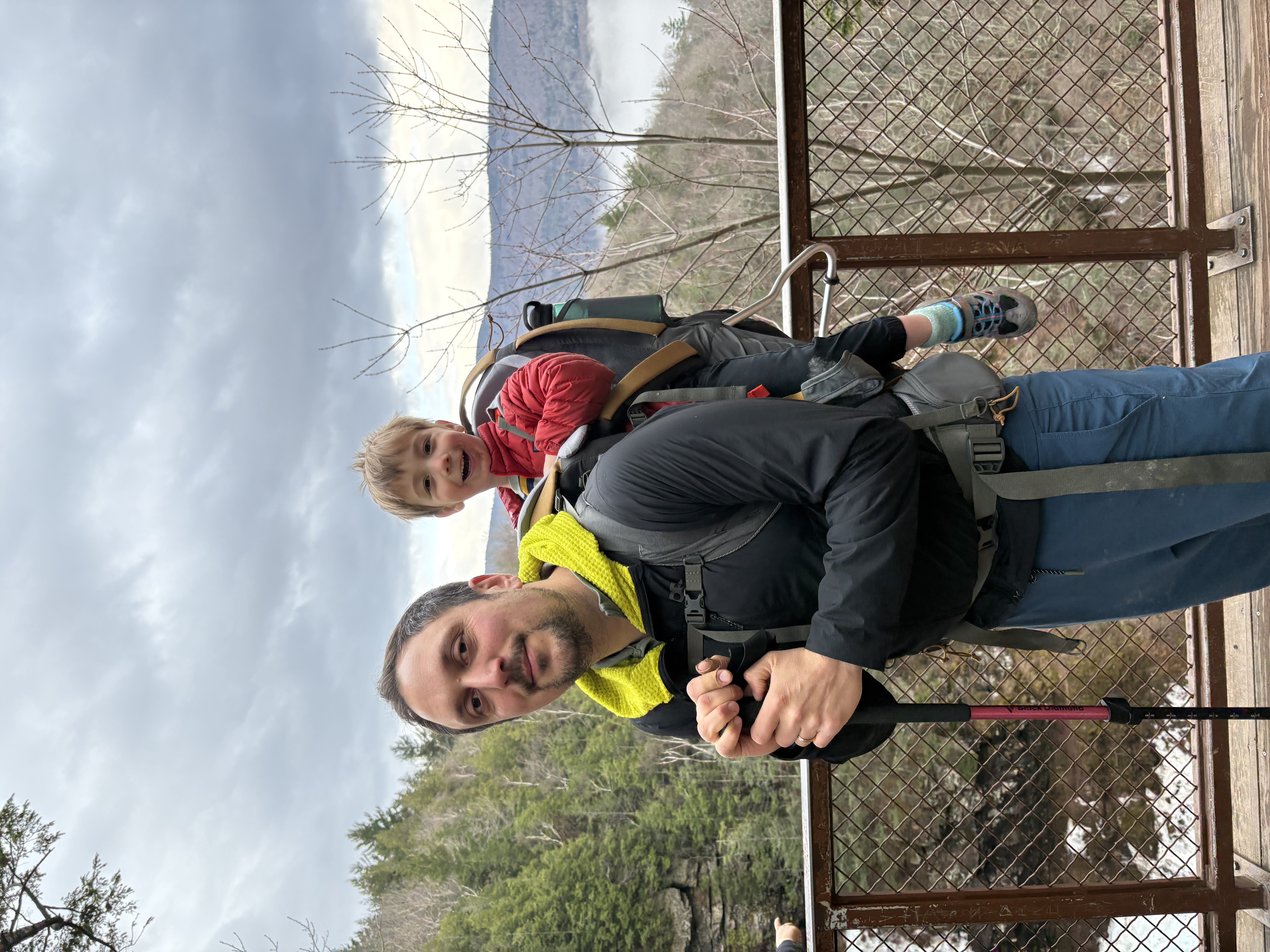
My story
I kind of fell into tutoring. In high school, I was an actor, an improviser, and a playwright. If you asked me then what I'd be doing for a career, it would be some combination of those three. I went to college against my will but ended up falling in love with thinking, debating, and writing. At Skidmore, my English professors demanded I read every text painstakingly closely, considering the information density of every word and phrase rather than merely synthesizing what established scholars had to say about a given text. My undergraduate distribution requirements led me to read widely, from Classical history and epic poetry to microbiology, theater criticism to Russian political science. I took a class designed by Stanford University called Language, Proof, and Logic, which taught me about the underlying structure of language and just how much quantification underpinned human communication. Little did I know I was being primed to enjoy the SAT.
After graduation, I started working at big tutoring companies whose size and personality weren't much different from McDonald's and Burger King. There, I learned a one-size-fits-all approach that was helpful for getting most students up to a slightly above-average score, but no further. I went out on my own and reverse-engineered the SAT, ACT, SSAT, and ISEE. I worked with higher- and higher-achieving students and paid attention to why different high scorers might plateau. I devised new strategies for how they could keep climbing.
I learned there's no perfect playbook that works for every student. But there's a pretty good playbook for how to adapt to the student you're working with. I enjoyed figuring out how to give a disengaged student a ladder of small wins to get them invested in the climb. How to get a hyperconscientious student to take calculated risks and save precious time on a test. How to persuade an overconfident student to identify where they might make a mistake, and to check their work despite their strong urge to say, “I'm done, and there's no way I'm not right.”
Why I built Peak Prep
I built Peak Prep because of nearly perfect breakfast burritos. Allow me to explain.
There's a lot of bad AI and ed tech out there. I mean, really bad. AI test-prep startups blanket social media with ads, and their products deliver slop. Not just slop. Unsolvable slop. Slop questions with wrong answers! The broader ed tech space is also a dumpster fire of poor user experience and over-gamification of learning. Starting from when children enter kindergarten, parents are expected to download countless separate apps: one for the bus schedule, another for snow-day alerts, etc. Each requires login credentials, but while one app's password requires two capital letters and a number, another requires a special character and your birthday typed backwards. Students and parents receive endless notifications, few of which are actionable, and none of which improve educational outcomes.
Back to the breakfast burritos. Behold this notification my brother received when my nephew was in 7th grade:

While my brother and I are both quite proud of Ezra for his acumen in creating edible pockets for peppers and eggs, and while we're concerned about what robbed him of a 100 (a failure to uniformly chop the peppers? A faint tear in the tortilla? A disagreement with the teacher as to whether ketchup had any place on, in, or near the burrito?), there was no reason anyone needed to know this via a digital ping in real time. This is the apotheosis of bad ed tech: everyone at Ezra's school meant well here, but their digital tools only ended up serving to distract and distress.
So what did I build instead? A zen garden. That's the term early users of Instagram used to describe the photo-sharing app. It was just a chronological scroll of pictures posted by friends. No ads, no videos, no content suggested by an algorithm designed to capture your precious attention. But Instagram was acquired by Facebook, which had no intention of maintaining the zen garden. Facebook only wanted to scale, to do whatever it took to keep as many eyeballs on its platforms as possible, and then to serve up ads to those eyeballs.
What I know about high-end tutoring is that it inherently doesn't scale. So I built my own zen garden and intend to keep it that way. With the help of agentic AI coding tools, I designed an app tailored to what my test-prep students need and nothing more. There are no ads. Minimal notifications. And there's no subscription—if you pay for the tutoring, you get to use the app.* What's inside is my tutoring team's wish list: focused exercises on vocabulary and formula retention, mental math, and logical reasoning. These are skills we want every test-prep student to have but that eat up too much time to work on during sessions. Some of these trainers already exist elsewhere on the internet, but our students would have to use several different apps to access them, and most require subscriptions and bombard students with ads and distracting video game dynamics, like streaks and points.
The app has become a collaborative effort among the tutors on my team. The beauty of agentic AI coding is how it's allowed us to compete with the resources of a larger company while moving with the speed of a startup. On our small and experienced team, every tutor is able to help design new features and refine existing ones, and is never required to use any part of the app that doesn't fit their teaching style. For all my talk about the app here, I've built more than that with Peak Prep: we're a team of tutors, each with our own approach, all with extensive experience and a love of teaching. You can think of the personalized instruction as the primary ingredient in our nearly perfect breakfast burrito. The app is just a zesty sauce.
Standardized tests have changed quite a bit since I started tutoring back in 2004. Of course, they'll continue to change. And we'll remain flexible. We'll stay on top of the tests, so our students can, too.
*In the spirit of world-leading mathematician Terence Tao, I want to note that all em dashes used on this page are human-generated!